
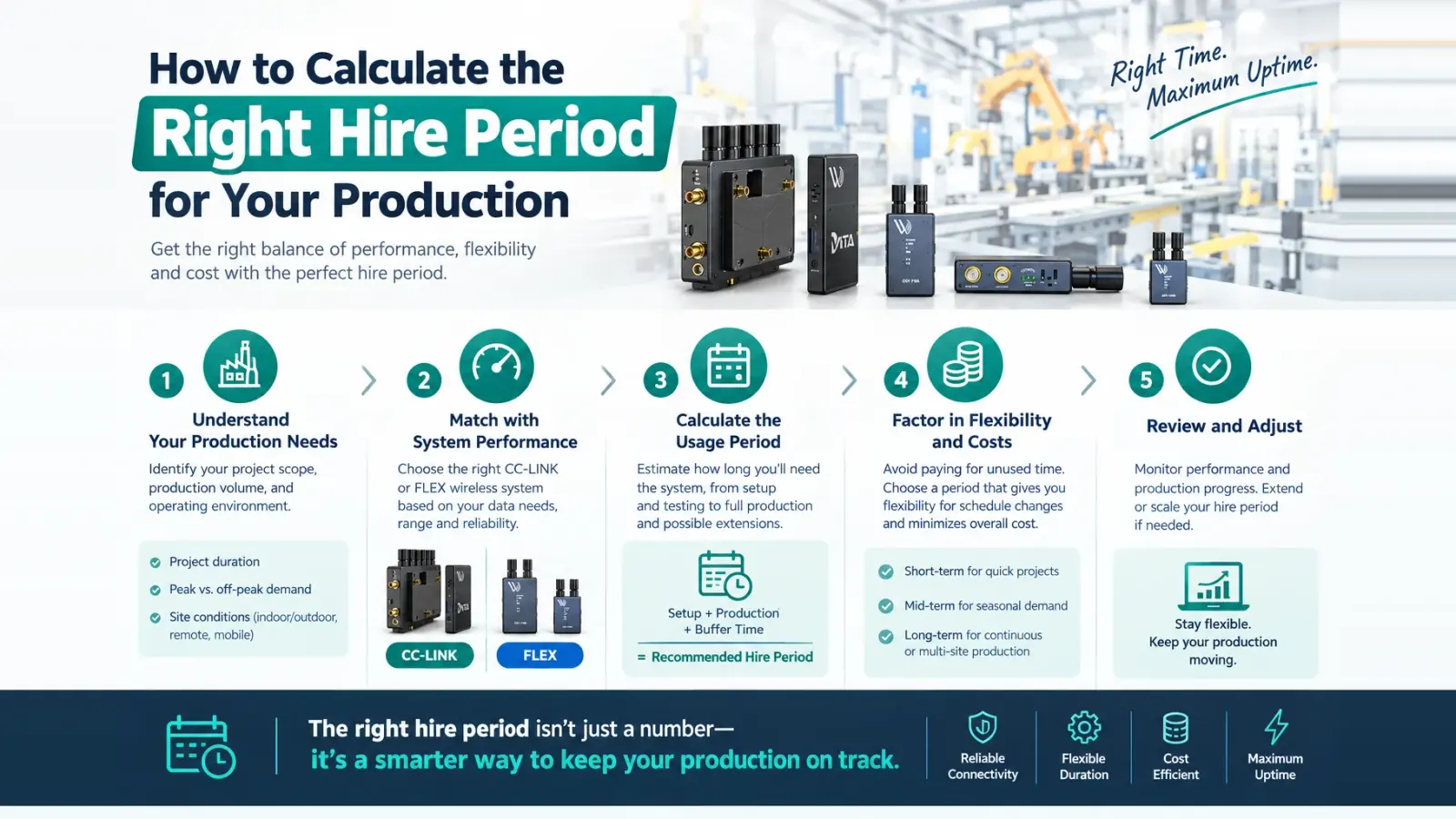
The Most Common Hire Period Mistake
The mistake that adds unnecessary cost to a wireless broadcast equipment hire is almost always the same one: counting the number of shoot days and treating that as the hire period. It is understandable, but it is not how a hire period works in practice, and the gap between shoot days and actual hire days has a direct effect on what you pay and whether you have the right kit when you need it.
Getting this right is straightforward once you understand how the periods are structured and how to count correctly from dispatch to return.
The Dispatch and Collection Days Count
Equipment dispatched from WaveHire's London facility on a Monday and returned on a Friday is a five-day hire, not three shoot days. The dispatch day and the collection day are part of the hire period. When you book, count from the day the kit leaves our facility to the day it comes back: that is the period you are hiring for.
This matters most for productions that have a tight budget and are trying to hit a weekly rate threshold. If equipment arrives with you on a Wednesday and the shoot runs Thursday and Friday, returning the kit on Monday morning is a six-day hire. If you can arrange to return it by the end of Friday, that is a three-day hire. Whether you need the kit over the weekend to prep for Monday is the question worth answering before you book.
When Weekly Rates Work in Your Favour
WaveHire's weekly rates are set at three times the daily rate across all systems. That means five hire days and seven hire days cost the same amount. Anything over three days and you are paying more by booking individual days than you would pay for the weekly rate.
For a practical example: hiring a VITA PRO System for four days at the daily rate of £125 costs £500. The weekly rate is £375. If your hire period is four days or more, the weekly rate is always the more cost-effective option, and it gives you two additional days of hire for the same price, which is useful buffer if the shoot overruns.
At £50 per day, a single Vita Transmitter for four days costs £200 at the daily rate. The weekly rate is £150. Again, anything beyond three days tips in favour of weekly. Apply this logic across every system in your order before you confirm a booking, particularly if your hire period sits between four and six days. The calculation is simple: if days × daily rate exceeds the weekly rate, book weekly.
Monthly Rates and When They Apply
Monthly rates are set at nine times the daily rate, which represents a meaningful saving over extended hire periods. For a FLEX Fusion at £225 per day, a month-long hire at the daily rate would cost £6,750 across 30 days. The monthly rate is £2,025, a reduction of over two thirds.
Monthly hires suit documentary and drama productions where wireless equipment is required throughout a multi-week shoot schedule. If your production is running more than three weeks with wireless kit in continuous or near-continuous use, the monthly rate should be your starting point.
Building in a Contingency Day
Location shoots rarely run precisely to schedule. Weather, access issues, technical delays and re-shoots are a routine part of production, and returning kit on the last day of a tight hire period creates pressure that serves no one well. The standard advice from 15 years of handling broadcast equipment hires is to build at least one contingency day into your hire period calculation.
If you are hiring multiple systems for a complex setup (say a FLEX Fusion for wireless video, a CC-LINK COMBO for data and RCP, and a VITA PRO System for monitoring), the administrative overhead of extending three separate hire periods under pressure is worth avoiding. One extra day built into the original booking costs less than a same-day extension under deadline pressure.
Staggering Hire Periods Across a Multi-Camera Setup
Not every camera on a production needs wireless equipment for the same number of days. A stadium shoot might have a roving ENG camera on a wireless link for the full five-day hire while a fixed camera position needs wireless monitoring only for the two days it is operating from a position without a cable run.
When different parts of a wireless setup have different operational windows, staggering hire start and end dates across systems can reduce the total cost. Speak to WaveHire before booking if your production has this kind of variable schedule. It is usually possible to structure the hire so each system is booked for the period it is actually needed.
What to Confirm Before You Book
Before confirming a hire period, have answers to these four points:
- What date does the kit need to leave WaveHire's facility?
- What date does the shoot end?
- Is there any prep or de-rig time that requires equipment to be on location before and after the shoot itself?
- And is there any realistic risk of the shoot overrunning that should be reflected in the hire period rather than managed as an extension?
With clear answers to those four questions, calculating the right hire period is mechanical. The weekly and monthly rate structures are designed to reward slightly longer bookings, and the contingency day is almost always worth including. Contact WaveHire directly if you want to talk through a specific production schedule before booking.
Further Reading
- BECTU The Broadcasting, Entertainment, Communications and Theatre Union.
- PACT The Producers Alliance for Cinema and Television.
- Wikipedia: Film production Background on how a production moves from planning through shooting.