Why Concert Venues Are Difficult RF Environments
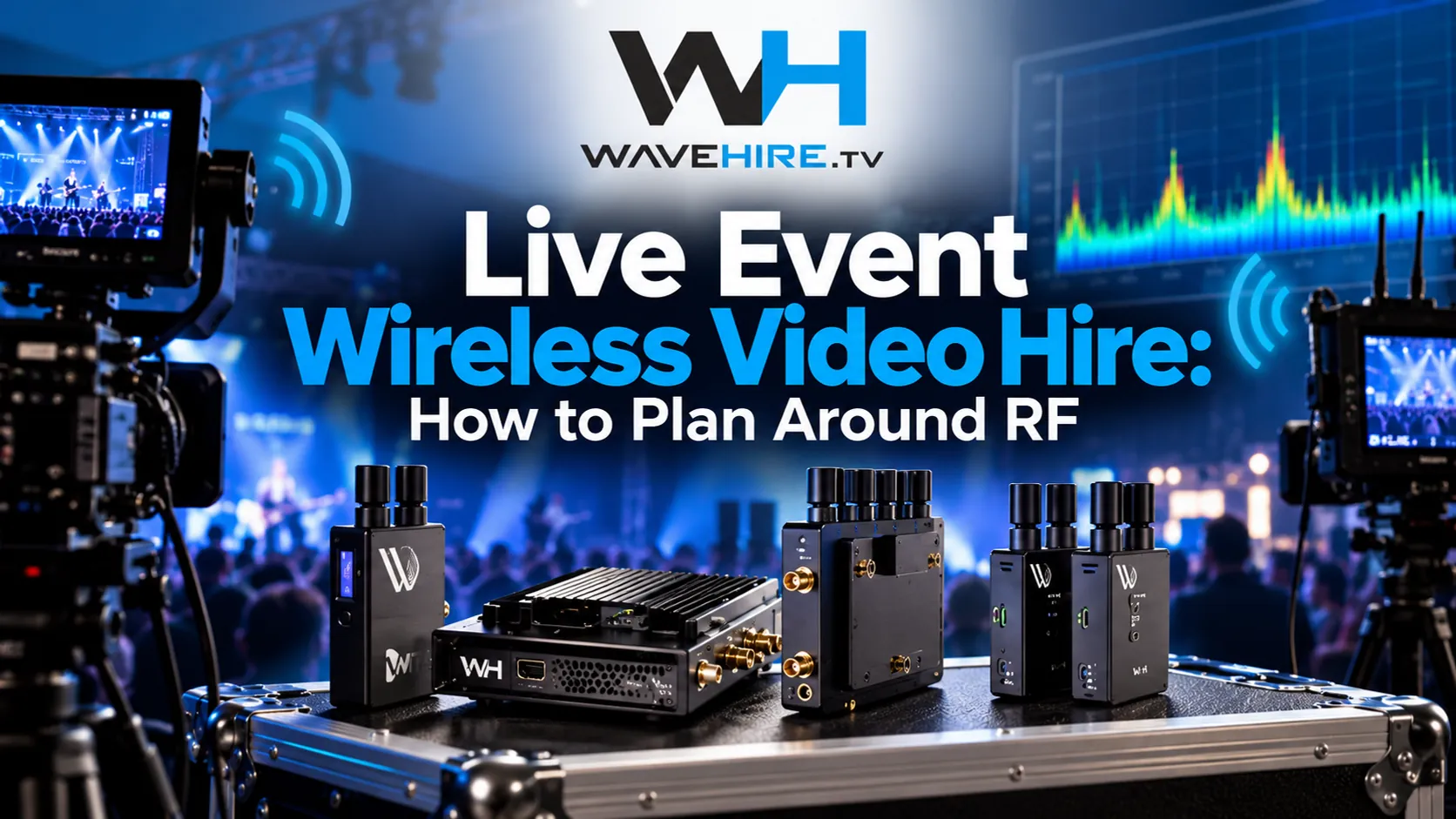
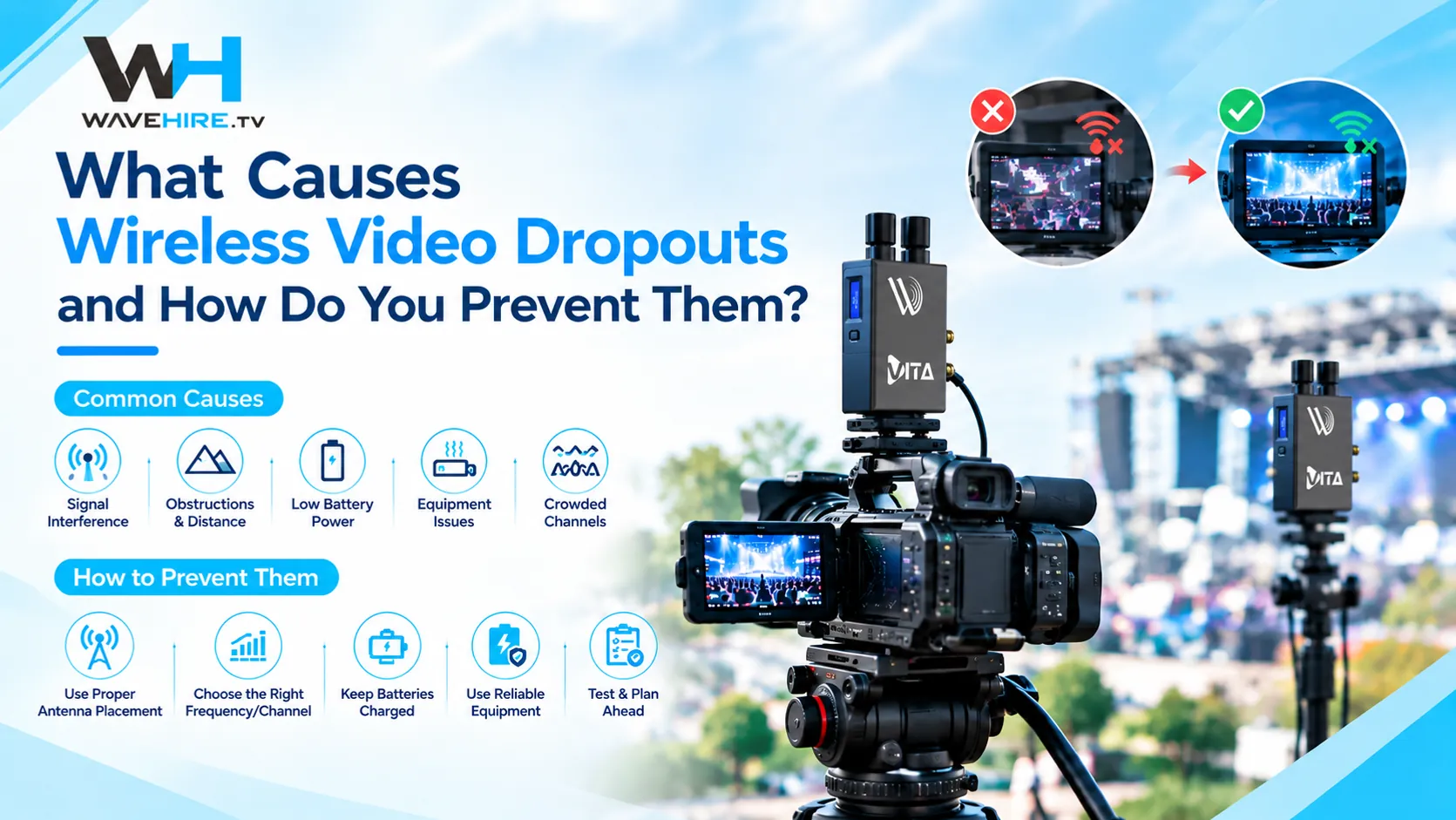
A concert venue during a live show is saturated with radio frequency traffic. In-ear monitor (IEM) systems for performers, radio microphones for artists and presenters, venue Wi-Fi, mobile networks operating at high density from the crowd, and any broadcast wireless systems from other crews sharing the location. All of this fills the spectrum before your monitoring system transmits its first signal.
The RF environment at a major arena or festival site is categorically different from the controlled conditions a wireless monitoring system was bench-tested in. Systems that achieve their rated range in open-air, low-interference conditions may perform differently in practice at a busy concert venue, and planning based on rated specifications without accounting for the real RF environment leads to disappointment on the night.
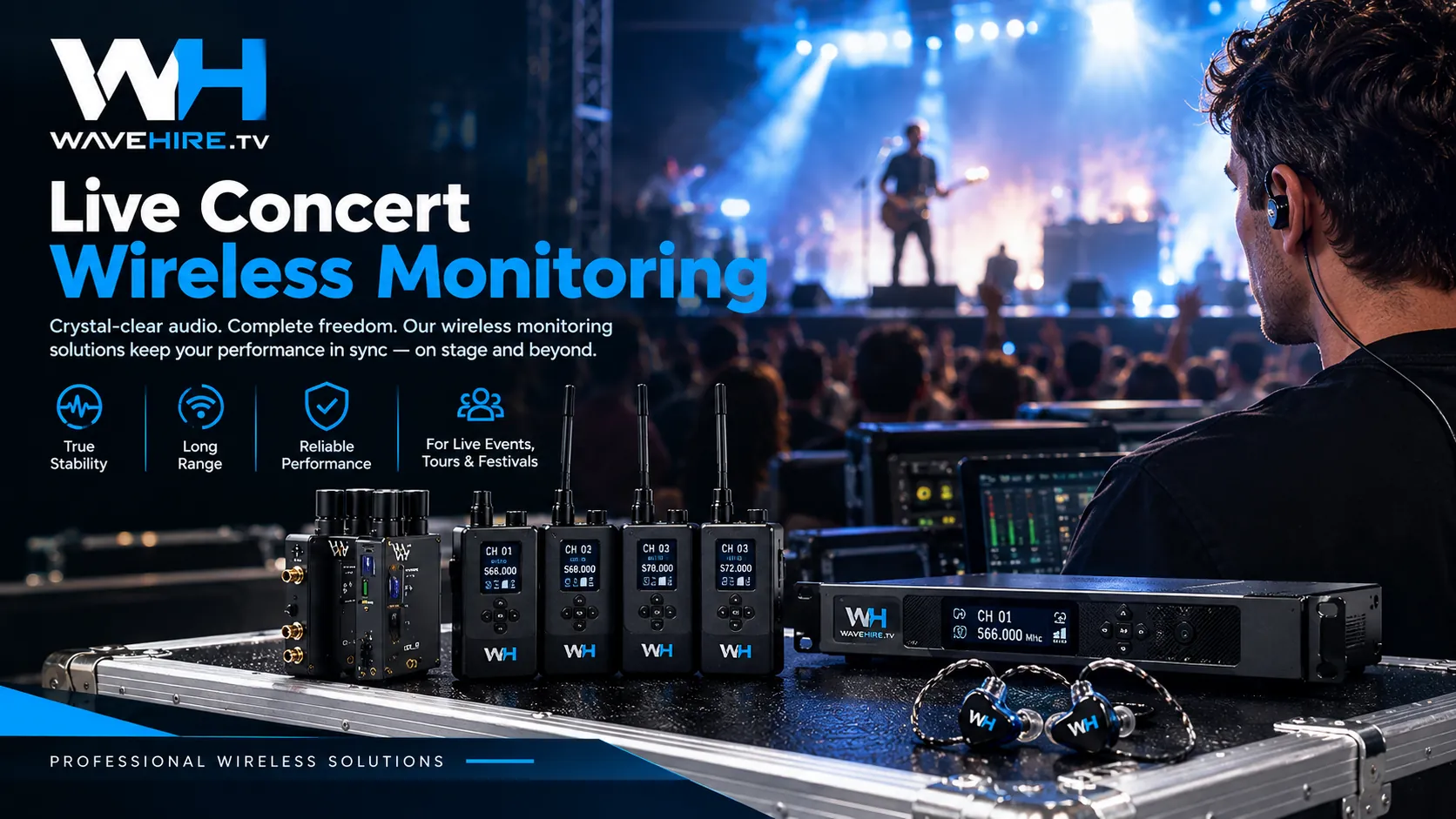
What Wireless Monitoring Is For at a Concert Production
Wireless monitoring at a concert production serves a specific purpose: getting a clean video picture from the camera or cameras to a monitor position where the director, DOP, or client needs to see the output without running a cable that would be a hazard, a constraint on camera movement, or simply impractical.
Common monitoring requirements on concert productions include a director's wireless monitor position in the auditorium or at the production desk, a DOP monitor near the camera operator's rig, a client monitor in a VIP or hospitality area, and a feed to a recording suite or nearby edit station.
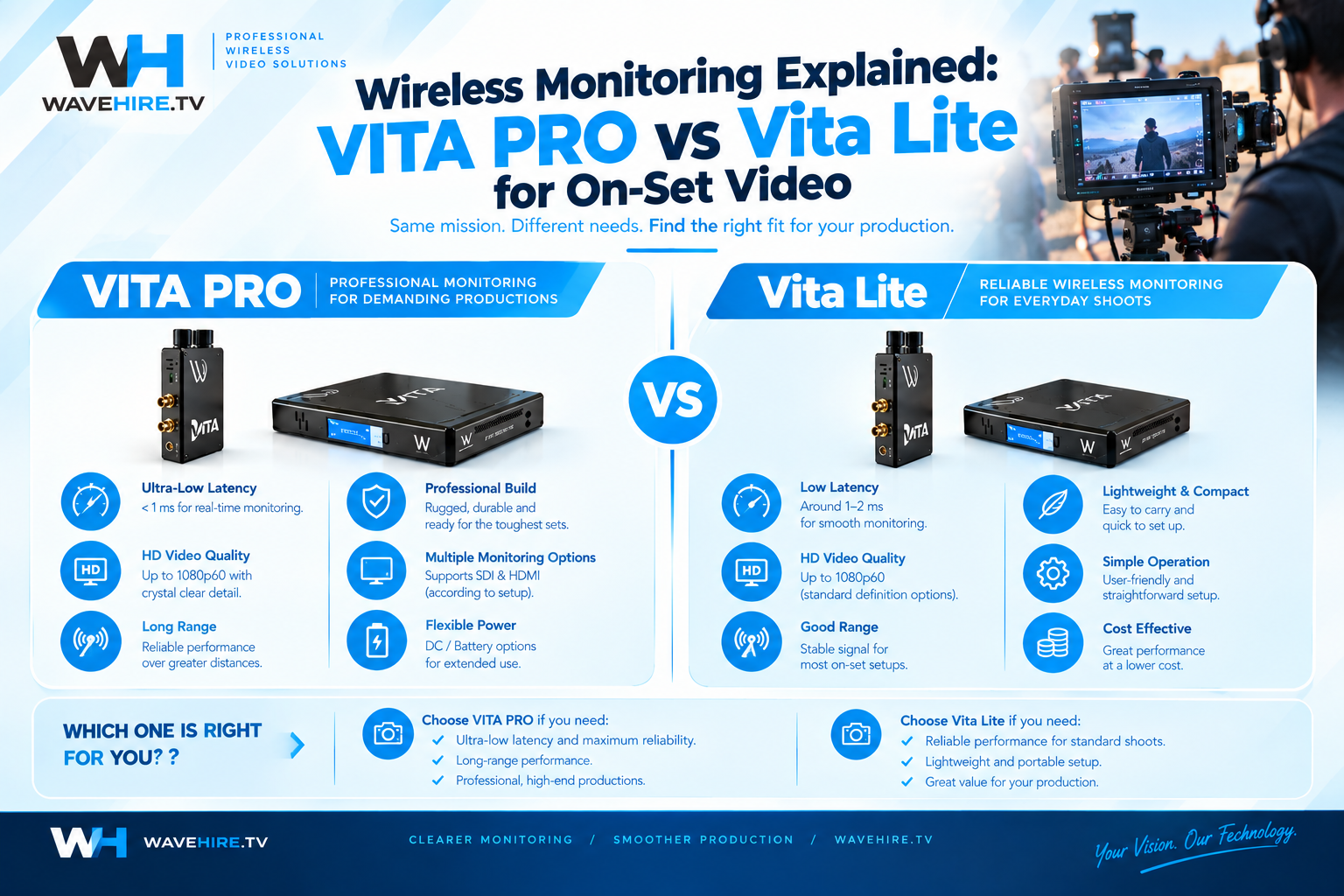
Choosing Between the VITA PRO and VITA Lite Systems
The choice between the VITA PRO System and the VITA Lite System for concert monitoring comes down to the operating distance and the environment.
VITA PRO System
Up to 600 mThe VITA PRO System is rated to up to 600 m line-of-sight and uses enhanced multi-antenna design for improved performance in multipath environments. It supports two HD-SDI outputs and HDMI at the receiver, which means you can feed multiple monitoring devices from a single receiver. At a large arena where the monitor position is at a significant distance from the camera and the RF environment is congested, the VITA PRO System is the appropriate specification.
VITA Lite System
Up to 300 mThe VITA Lite System is rated to up to 300 m line-of-sight. The transmitter weighs 260 g and the receiver 240 g, making both compact enough to rig discreetly. For a smaller venue, a festival stage with a monitoring position close to the action, or a production where the monitoring distance is well within 300 m and the RF environment is less saturated, the VITA Lite System covers the requirement at a lower daily rate.
Expanding Monitoring Coverage with Individual Units
Individual Vita Transmitters and Vita Lite Receivers allow you to build out a monitoring configuration beyond the standard TX/RX system kit. A Vita Transmitter can be used to add a transmit point for a camera position, and a Vita Lite Receiver can add a monitoring endpoint at an additional position. Both carry sub-1 ms system latency when used as part of a compatible VITA wireless link.
If you are considering a configuration that involves multiple transmitters or receivers within the same monitoring setup, confirm the specific arrangement with WaveHire at booking to ensure the system combination is appropriate for your production requirements.
RF Coordination at Concert Venues
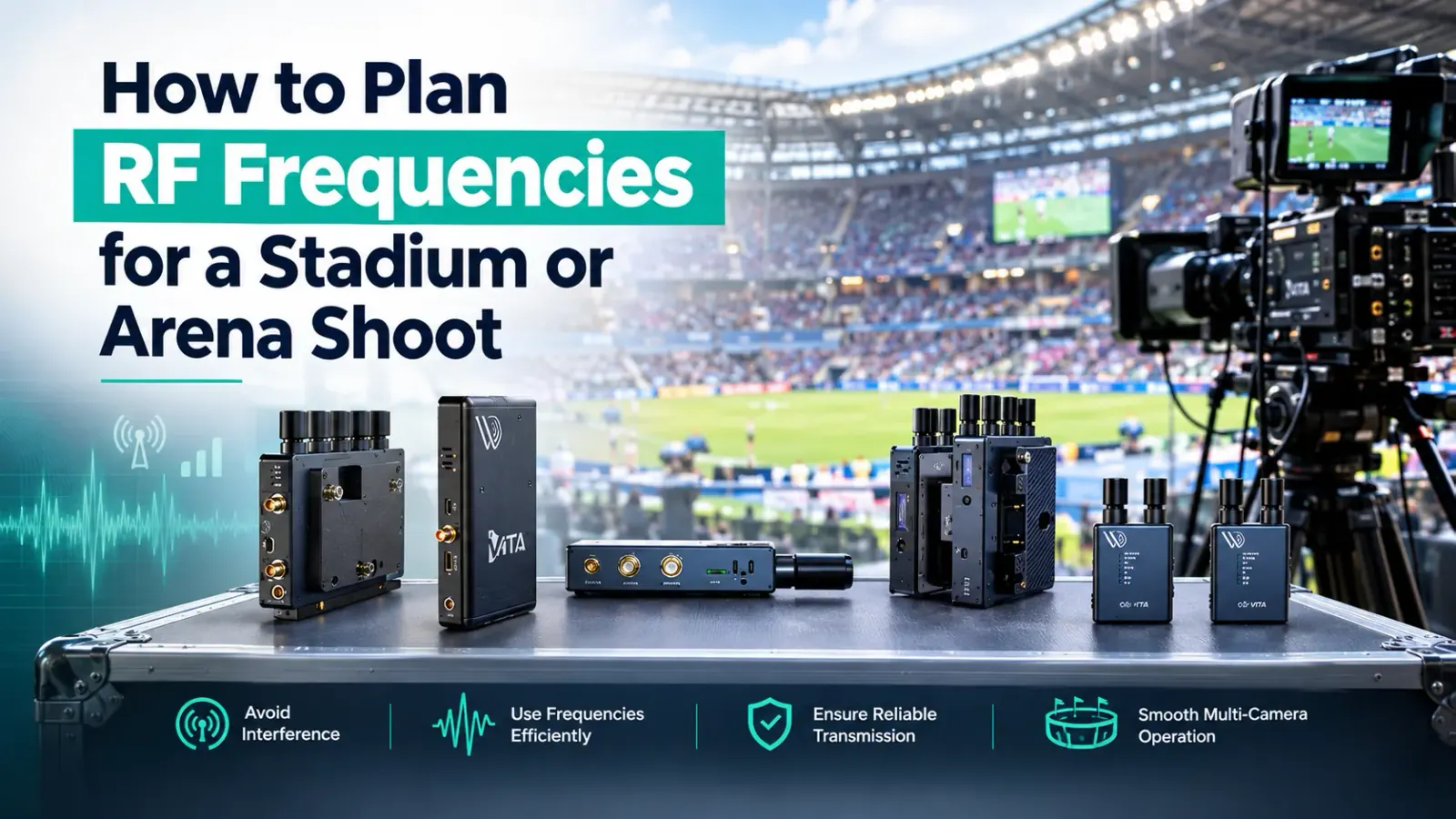
Before a concert production, liaise with the venue's RF coordinator and with the production's audio department. The IEM and radio mic frequencies in use need to be in your possession before you plan wireless monitoring frequencies. Your monitoring system needs to operate in frequency ranges that do not interfere with, or receive interference from, the audio wireless systems. Frequency use in the UK is covered by Ofcom PMSE licensing.
The VITA range operates in the 5.1–5.9 GHz OFDM band, which is separated from the UHF bands typically used by IEM and radio mic systems. This frequency separation significantly reduces the risk of cross-system interference. Even with this separation, a scan of the 5 GHz band at the venue is worthwhile, as Wi-Fi infrastructure at modern venues often occupies significant portions of this band.
Line-of-Sight Considerations in an Arena
The most common planning oversight for concert wireless monitoring is assuming that a distance within the system's rated range will work regardless of what is in between the transmitter and receiver.
A camera at the stage end of an arena and a monitor at the back of the auditorium may be within 600 m in a straight line, but that line passes through several thousand people, a lighting rig, and a sound system. The VITA PRO System's enhanced antenna design and OFDM modulation handle multipath and obstruction better than simpler systems, but no wireless monitoring system treats a packed arena floor as equivalent to free-space propagation.
Related Equipment
Further Reading
- Ofcom PMSE licensing Licensing for Programme Making and Special Events spectrum in the UK.
- Production Guild The professional body for film, television and live event production crew.