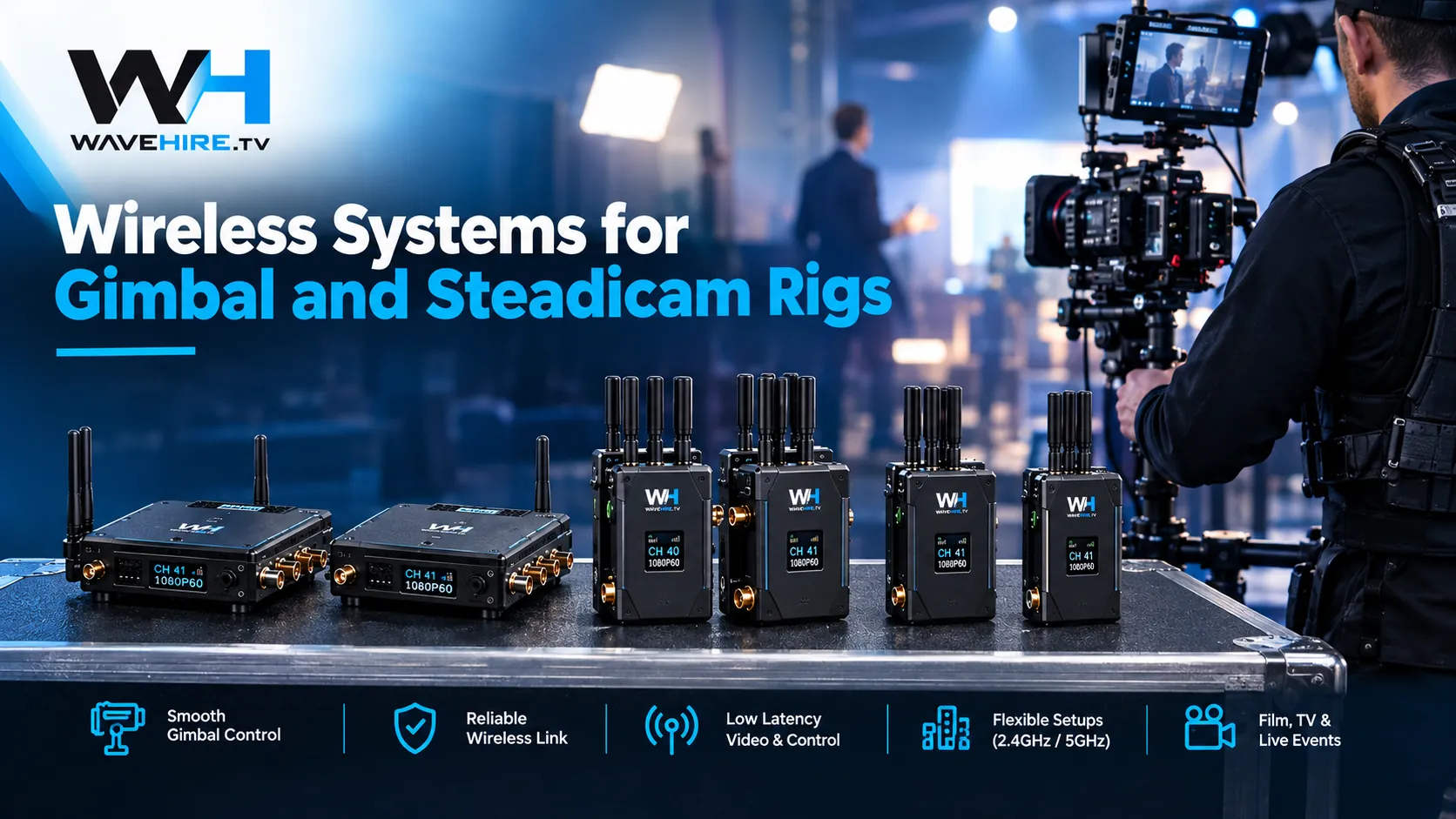
Why Moving Camera Rigs Need Different Wireless Thinking
A camera mounted on a tripod with a wireless transmitter can tolerate a certain amount of added weight without operational consequence. A Steadicam or gimbal rig is a precision-balanced system where additional weight and its position relative to the rig's centre of gravity directly affects how the rig performs.
Adding a wireless transmitter to a Steadicam sled without accounting for the balance change forces the operator to re-balance the rig. Depending on where the transmitter is mounted and what battery configuration it uses, the rebalancing may involve adjusting both the fore-aft and top-bottom balance of the sled. On a production day, this adds setup time and means any change to the wireless configuration requires another balance check.
On a gimbal, weight distribution across the three axes determines whether the gimbal's motors can handle the configuration. Adding a heavy wireless transmitter to the camera cage without accounting for roll, tilt, and pan balance may exceed one axis's motor capacity or cause vibration that appears in the footage.
Weight and Form Factor First
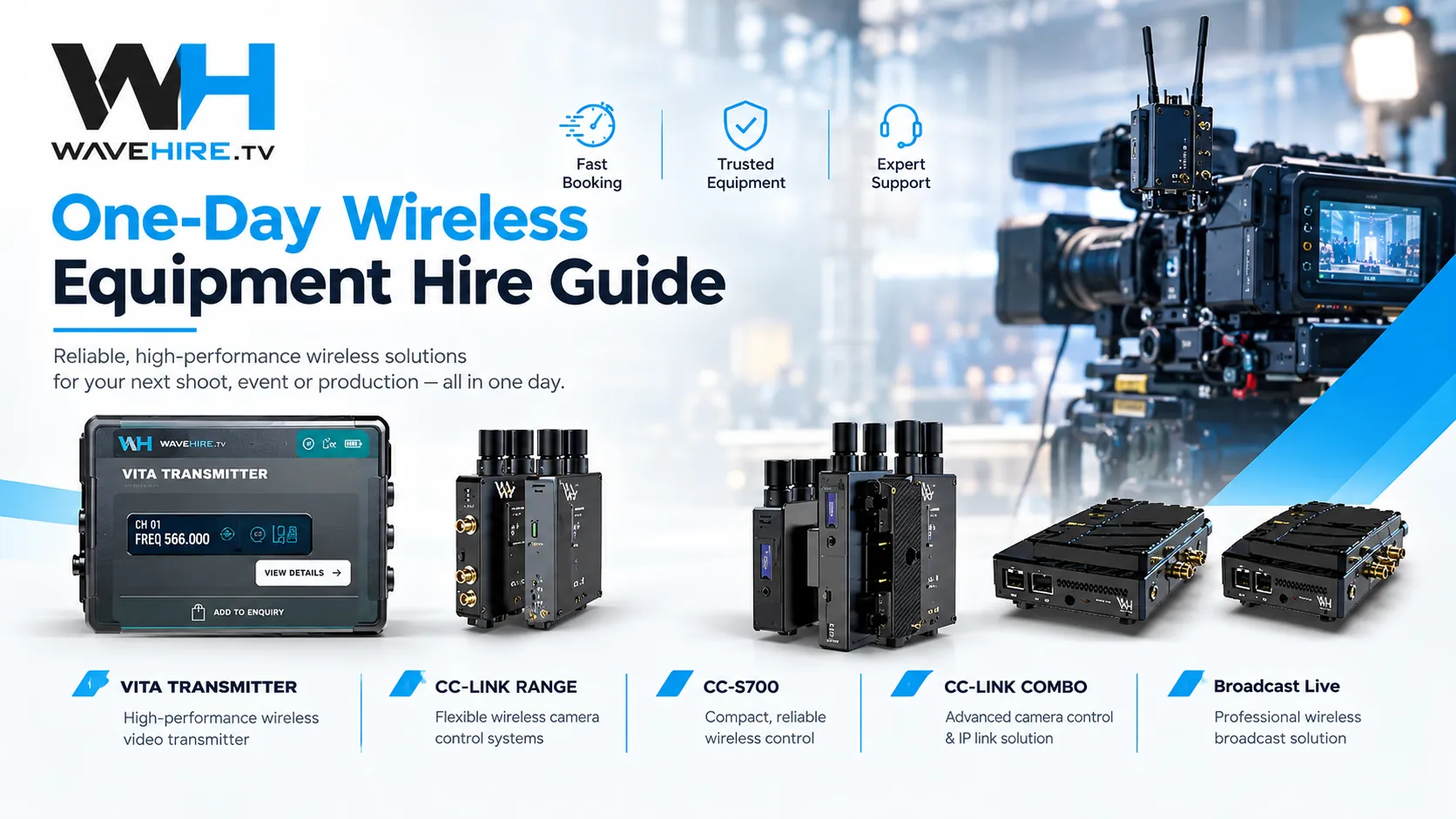
Before specifying a wireless system for a gimbal or Steadicam, establish the weight budget. The Vita Transmitter weighs 260 g, among the lightest wireless transmitters in the VITA range and the appropriate specification for a moving camera rig where monitoring is the requirement and minimising added weight is a priority. Its compact physical footprint reduces the mounting footprint on a camera cage, and its dual RP-SMA antennas can be oriented to maintain consistent performance through the rig's movement.
Cable Management on a Moving Rig
A wireless transmitter on a Steadicam sled needs a clean SDI connection from the camera body to the transmitter input. On a rig that rotates, tilts, and moves continuously, a cable that is too short will tension and potentially disconnect, and a cable that is too long will loop and catch on the rig hardware.
The VITA Transmitter's HD-SDI input allows the camera's SDI output to connect directly to the transmitter, with the HD-SDI loop output providing continuity to any wired monitoring connection on the sled itself if needed. For gimbals, the cable run from the camera body to a transmitter mounted on the cage needs to be routed to accommodate the gimbal's range of motion.
Latency on a Steadicam or Gimbal Monitoring Feed
The director or DOP monitoring a Steadicam or gimbal camera needs to see what the camera is seeing in real time. A monitoring delay of more than a fraction of a second disrupts the communication between the director and the operator: the director is reacting to a position the camera has already moved past.
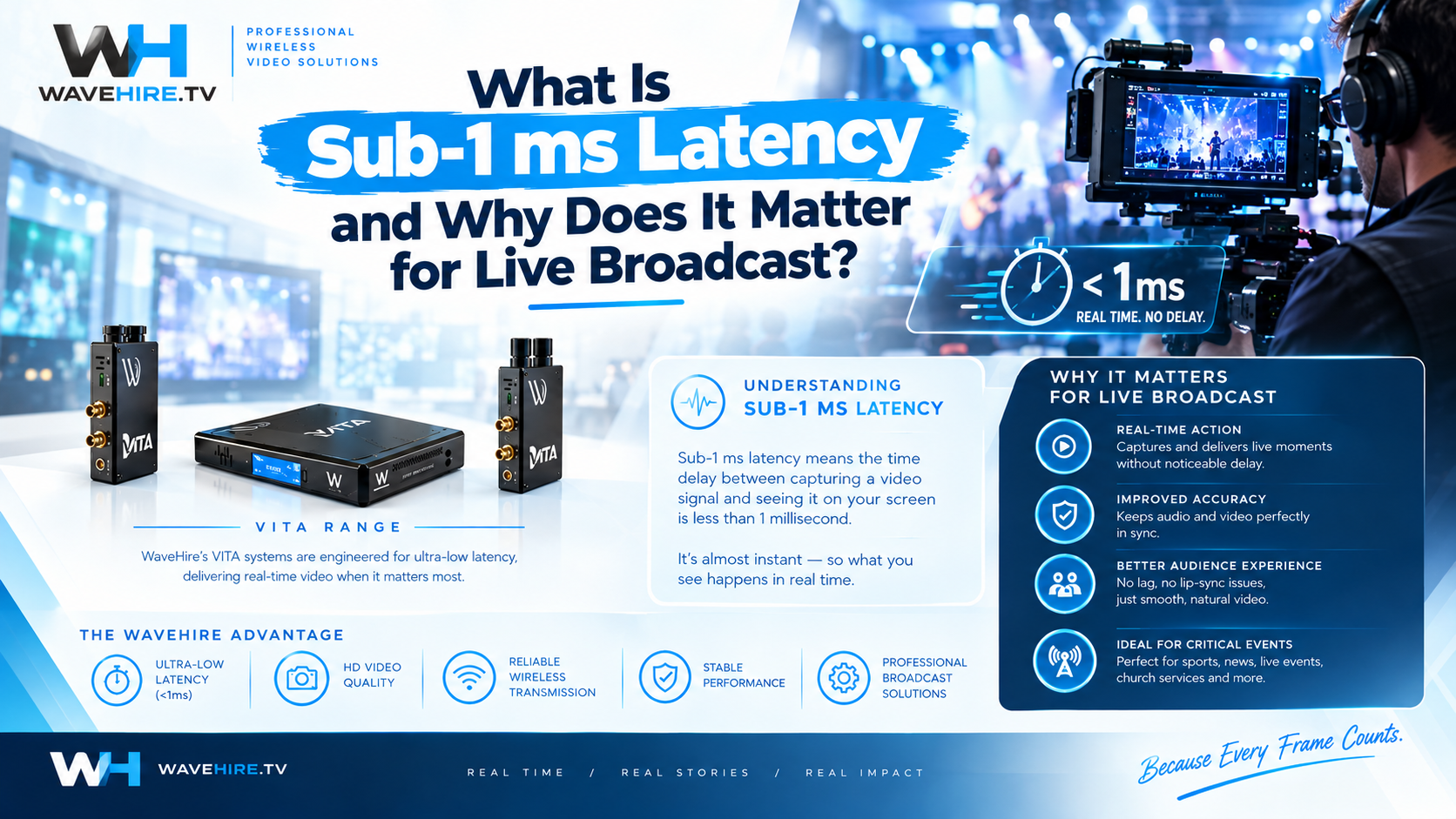
The VITA range delivers sub-1 ms system latency, which is effectively imperceptible in practice. This makes the wireless monitoring feed functionally equivalent to a wired video return in terms of the director-operator communication loop.
Antenna Orientation Through Movement
A Steadicam rig rotates through a full range of orientations during normal operation. The transmitter's antennas will point in different directions as the operator moves. Fixed directional antennas at the transmitter are not appropriate for a moving rig. The antenna pattern will create dead spots as the rig rotates.
Omnidirectional antennas, which the Vita Transmitter uses (dual RP-SMA), maintain consistent coverage through the rig's movement. At the receiver end, a fixed antenna placed with a clear line of sight to the rig's operating area is the appropriate configuration.
Battery Configuration on a Moving Rig
The VITA Transmitter uses standard broadcast batteries. On a Steadicam sled, adding the wireless transmitter to the power chain, using a regulated power tap from the sled rather than a separate battery, reduces the weight of a dedicated transmitter battery and simplifies battery management during the shoot day. Confirm the transmitter's power input voltage range with WaveHire when booking to ensure compatibility with your sled's power output.
Related Equipment
Further Reading
- British Cinematographer Magazine covering cinematography, camera crews and production technology.